

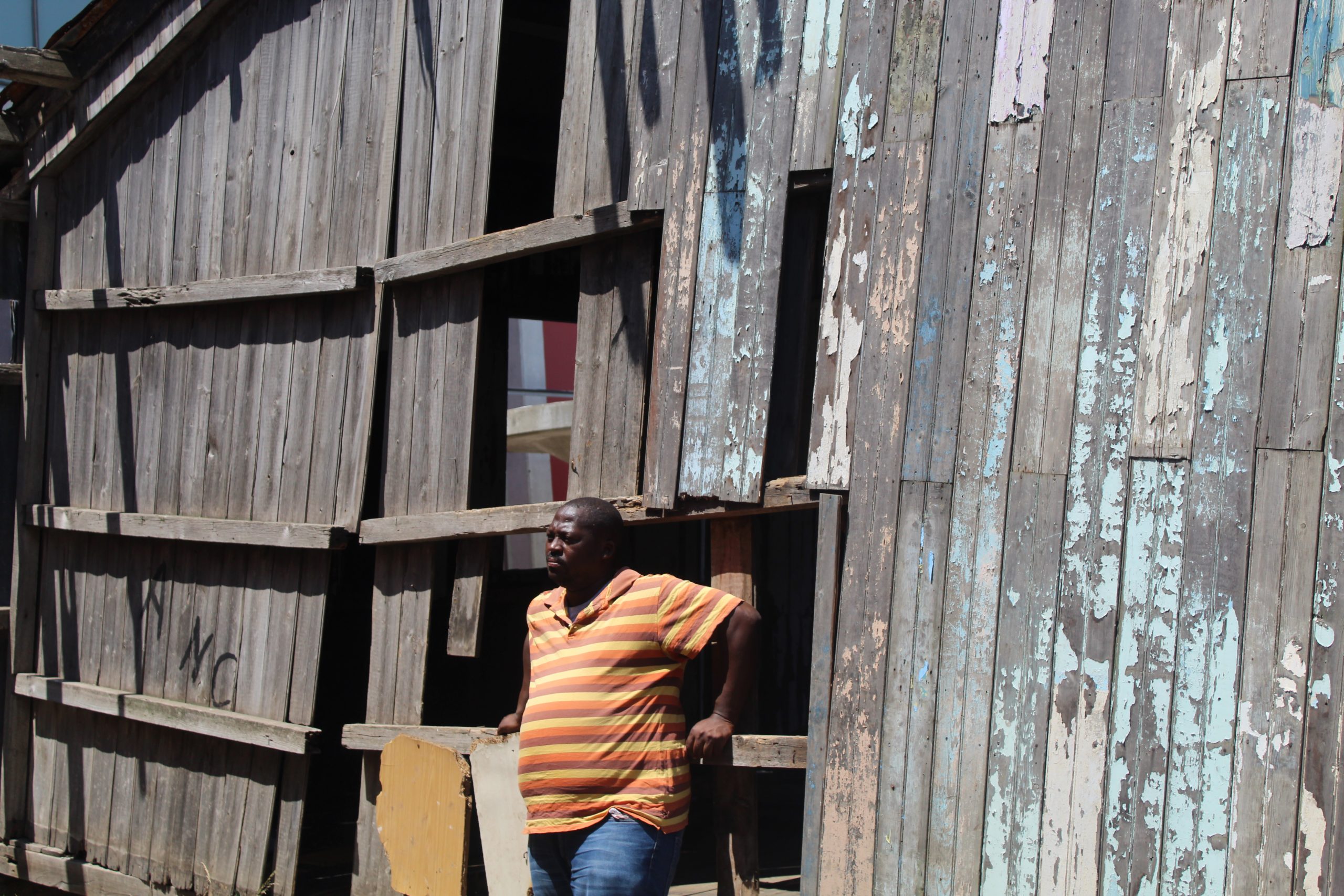
Thoughtful Thursdays: stimulating debate between audience members, theatre makers and struggle stalwarts. The power of theatre is used to (re)create a physical experience that allows community members to engage the untold trauma and histories of geographic spaces. It is difficult of quantify the deaths and torture imposed on black bodies however, culture informs that after violent deaths cleansing must take place.
We use theatre to instigate debate and as an instrument to archive a people’s memory, undocumented narratives, and facilitate the identifying of geographic locations for cleansing rituals informed incollective culture.
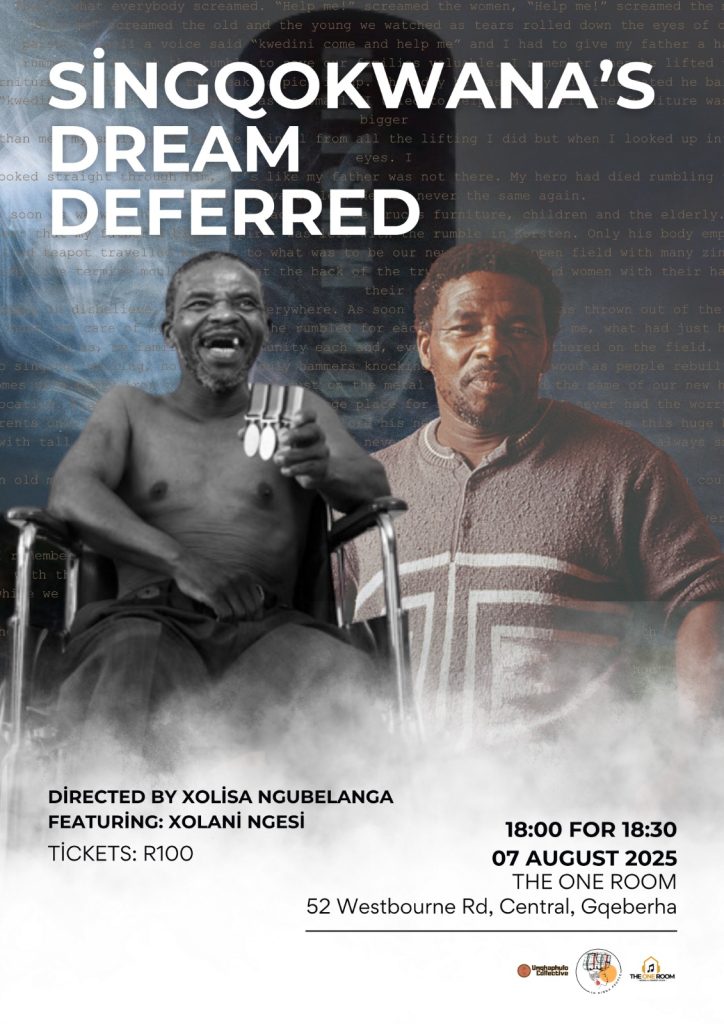
Singqokwana’s Dream Deferred: a play about a man who became politically active after being wrongfully arrested during the 1952 Defiance Campaign in New Brighton, Gqeberha, spending six weeks at North End Prison, popularly known as Rooi Hell because of misidentification by police, who were looking for a neighbor. In 1962, he left South Africa for military training in Ethiopia. He was arrested in Rhodesia enroute back to South Africa in January 1963 and was detained alongside Nelson Mandela in Robben
Island for 14 years, to be released with a five-year ban in April 1977. He joined Umkhonto we Sizwe and helped launch and lead the 1980s civic movement in the Eastern Cape. Even though he was banned, he helped to launch the Port Elizabeth Black Civic Organization (PEBCO) in 1979.
Malgas became the face of the Truth and Reconciliation Commission (TRC) due to his testimony of torture through the Helicopter Method. The play will be followed by a presentation by anti-apartheid activist Mkhuseli Jack, who led the Consumer Boycott Campaign in the 1980s.
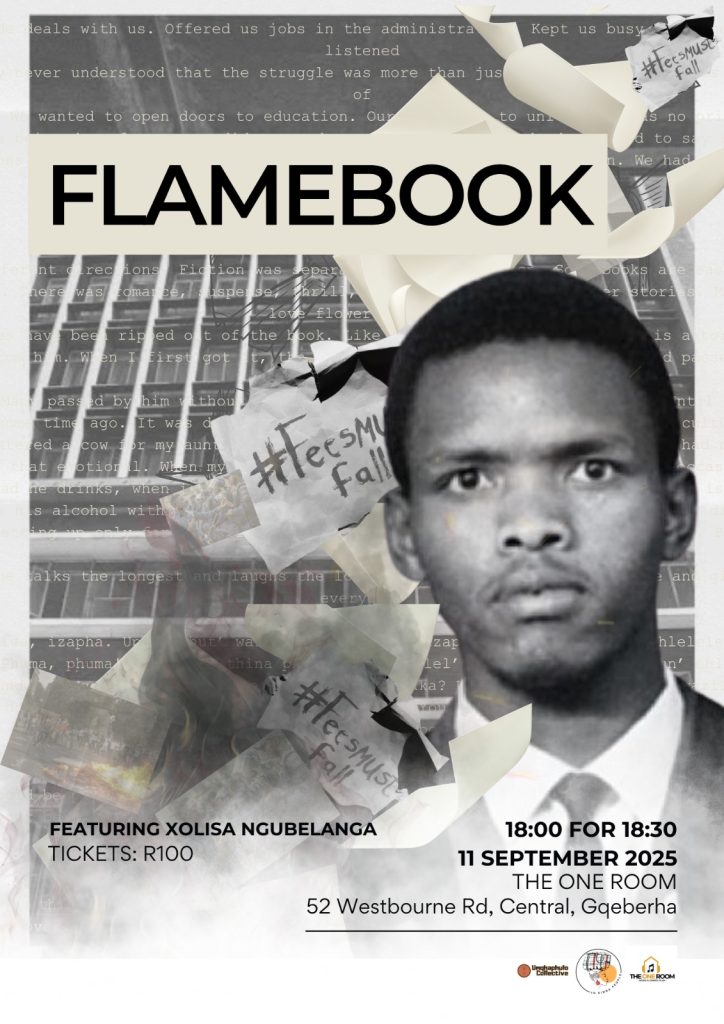
Flamebook: Fire, capable of both disaster and cleansing, has proved to be the oppressed people’s weapon of choice during protest and has become characteristic of the South African struggle. A detained student leader uses fire to connect the trials of FeesMustFall with that of his father during the state of emergency. The student details an ordeal where he had to set a university building alight during their protest while reminiscing on his father’s anguish as he sat in prison with his teeth broken during an assault by the police after being arrested at a road block during Biko’s detention. September 1977, Steve Biko was detained in Port Elizabeth, leading to his death and funeral in King Williams Town. During Biko’s funeral, it is said that thousands of people were turned away at roadblocks
by the police, ultimately leaving them angered. Two days after that, the Port Elizabeth City Hall is engulfed in fire.
No official narrative exists joining or disjointing the event, through theatre we study how the history of architecture and buildings can be used to reconstruct the silenced and erased human narratives.stalwarts. The power of theatre is used to (re)create a physical experience that allows community members to engage the untold trauma and histories of geographic spaces. It is difficult of quantify the deaths and torture imposed on black bodies however, culture informs that after violent deaths cleansing must take place.
We use theatre to instigate debate and as an instrument to archive a people’s memory, undocumented narratives, and facilitate the identifying of geographic locations for cleansing rituals informed in collective culture.